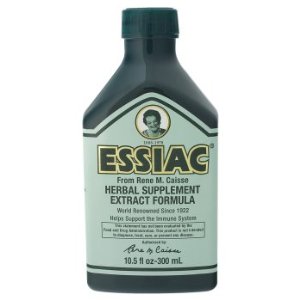
The Story of ESSIAC® byRene M.
Caisse, R.N.
Preface
The reasons why I was not imprisoned
for running
an open Cancer Clinic at Bracebridge, Ont., for 8 years, were:
1. Because I achieved good results in animal
research
under the observation of medical doctors. My treatments caused a
regression
of the malignant growth in the mice, and prolonged life.
2. Because I achieved the same results on
humans, always
treating with the permission of medical men of good standing, and under
their observation.
3. Because I had clinical x-ray and
pathological proof
of results, after everything known to medical science had failed.
4. Because 55,000 persons signed a petition
to the Ontario
Government Legislature in favour of my treatment for cancer; 387
patients
and many doctors signed this same petition, which was presented to a
legislative
committee of 59 members of parliament. I lost out by only three votes.
I lost because the doctors had assured the Legislature beforehand that
they would appoint a "Cancer Commission" to hear my case, and to give
my
treatment a fair hearing which proved to be a very unfair hearing, as
you
will see by this story.
It All Began in Northern Ontario
One day one of my nurses was bathing
an elderly
lady patient. I noticed that one breast was a mass of scar tissue, and
asked about it.
"I came out from England nearly 30 years
ago." she told
me. "I joined my husband who was prospecting in the wilds of Northern
Ontario.
My right breast became sore and swollen, and very painful. My husband
brought
me to Toronto, and the doctors told me I had advanced cancer and my
breast
must be removed at once.
"Before we left camp a very old Indian
medicine man had
told me I had cancer, but he could cure it. I decided I’d just as soon
try his remedy as to have my breast removed. One of my friends had died
from breast surgery. Besides, we had no money."
She and her husband returned to the mining
camp, and the
old Indian showed her certain herbs growing in the area, told her to
make
a tea from these herbs and to drink it every day.
She was nearly 80 years old when I saw her
and there had
been no recurrence of cancer.
I was much interested and wrote down the
names of the
herbs she had used. I knew that doctors threw up their hands when
cancer
was discovered in a patient; it was the same as a death sentence, just
about. I decided that if I should ever develop cancer, I would use this
herb tea.
About a year later I was visiting an aged
retired doctor
whom I knew well. We were walking slowly about his garden when he took
his cane and lifted a weed.
"Nurse Caisse," he told me, "if people would
use this
weed there would be very little cancer in the world."
He told me the name of the plant. It was one
of the herbs
my patient named as an ingredient of the Indian medicine man’s tea!
A few months later I received word that my
mother’s only
sister had been operated on in Brockville, Ontario. The doctors had
found
she had cancer of the stomach with a liver involvement, and gave her at
the most six months to live.
I hastened to her and talked to her doctor.
He was Dr.
R.O. Fisher of Toronto, whom I knew well because I had nursed patients
for him many times. I told him about the herb tea and asked his
permission
to try it under his observation, since there was apparently nothing
more
medical science could do for my aunt.
He consented quickly. I obtained the
necessary
herbs, with some difficulty, and made the tea.
My aunt lived for 21 years after being given
up by the
medical profession. There was no recurrence of cancer.
Dr. Fisher was so impressed he asked me to
use the treatment
on some of his other hopeless cancer cases. Other doctors heard about
me
from Dr. Fisher and asked me to treat patients for them after
everything
medical science had to offer had failed. They too were impressed with
the
results.
Several of these doctors asked me if I would
be willing
to use the treatment on an old man whose face was eaten away, and who
was
bleeding so badly the doctors said he could not live more than 10 days.
"We will not expect a miracle," they told
me. "But if
your treatment can help this man in this stage of cancer, we will know
that you have discovered something the whole world needs desperately --
a successful remedy for cancer."
My treatment stopped the bleeding in 24
hours. He lived
for six months with very little discomfort.
On the strength of what those doctors saw
with their own
eyes, eight of them signed a petition to the Department of National
Health
and Welfare at Ottawa, asking that I be given facilities to do
independent
research on my discovery. Their petition, dated at Toronto on October
27,
1926, read as follows:
To Whom It May
Concern:
We the undersigned believe that the
"Treatment for Cancer"
given by Nurse R.M. Caisse can do no harm and that it relieves pain,
will
reduce the enlargement and will prolong life in hopeless cases. To the
best of our knowledge, she has not been given a case to treat until
everything
in medical and surgical science has been tried without effect and even
then she was able to show remarkable beneficial results on those cases
at that late stage.
We would be interested to see her given an
opportunity
to prove her work in a large way. To the best of our knowledge she has
treated all cases free of any charge and has been carrying on this work
over the period of the past two years.
(Signed by the eight doctors)
I was joyful beyond words at this expression
of confidence
by such outstanding doctors regarding the benefits derived from my
treatment.
My joy was short-lived. Soon after receiving this petition, the
Department
of Health and Welfare sent two doctors from Ottawa to have me arrested
for "practising medicine without a licence".
This was the beginning of nearly 50 years of
persecution
by those in authority, from the government to the medical profession,
that
I endured in trying to help those afflicted with cancer.
However, when these two doctors sent from
Ottawa, found
that I was working with nine of the most eminent physicians in Toronto,
and was giving my treatment only at their request, and under their
observation,
they did not arrest me.
Dr. W.C. Arnold, one of the investigating
doctors, became
so interested in my treatment that he arranged to have me work on mice
at the Christie Street Hospital Laboratories in Toronto, with Dr.
Norich
and Dr. Lockhead. I did so from 1928 through 1930. These mice were
inoculated
with Rous Sarcoma. I kept the mice alive 52 days, longer than anyone
else
had been able to do, and in later experiments with two other doctors, I
kept mice alive for 72 days with ESSIAC.
This was not my first clinical experience. I
had previously
converted Mother’s basement into a laboratory, where I worked with
doctors
who were interested in my treatment. We found that on mice inoculated
with
human carcinoma, the growth regressed until it was no longer invading
living
tissue after nine days of ESSIAC treatments.
This was during the period when I was
working on Dr. Fisher’s
suggestion that the treatment could be made effective if given by
injection,
rather than in liquid form, as a tea. I started eliminating one
substance
and then another; finally when the protein content was eliminated, I
found
that the ingredients which stopped the malignancy growth could be given
by intermuscular injection without causing the reaction that had
followed
my first experiments with injecting mice. However, I found that the
ingredients
removed from the injection formula, which reduced growth of cancer,
were
necessary to the treatment. These apparently carried off destroyed
tissue
and infections thrown off by the malignancy. By giving the
intermuscular
injection in the forearm, to destroy the mass of the malignant cells,
and
giving the medicine orally to purify the blood, I got quicker results
than
when the medicine was all given orally, which was my original
treatments
until Dr. Fisher suggested further experiments and developing an
injection
that could be given without reaction.
I well remember the first injection of the
medication
in a human patient. Dr. Fisher called and said he had a patient from
Lyons,
New York, who had cancer of the throat and tongue. He wanted me to
inject
ESSIAC into the tongue.
Well, I was nearly scared to death.
And there
was a violent reaction. The patient developed a severe chill; his
tongue
swelled so badly the doctor had to press it down with a spatula to let
him breathe.
This lasted about 20 minutes. Then the
swelling went down,
the chill subsided, and the patient was all right. The cancer stopped
growing,
the patient went home and lived quite comfortably for almost four years,
At the time I first used my treatment on
terminal cancer
cases --or cancers that did not respond to approved treatment referred
to me by the nine Toronto doctors -- I was still nursing 12 hours a
day,
the customary work day for nurses then. I had only my two-hour rest
period
and my evenings to give to my research work and my treatments.
I decided to give up nursing, to have more
time for my
research and treatment of patients. Doctors started sending patients to
me at my apartment and I was treating about 30 every day.
I now felt I had some scientific evidence to
present that
would convince the medical profession my treatment had real merit. I
made
an appointment with Dr. Frederick Banting of the Banting Institute,
Department
of medical Research, University of Toronto, world famous for his
discovery
of insulin.
After reading my case notes, and examining
pictures of
the man with the face cancer before and after treatment, and x-rays of
other cancers I had treated, he sat quietly for a few minutes staring
into
space.
"Miss Caisse," he finally said, turning to
look me straight
in the eyes, "I will not say you have a cure for cancer. But you have
more
evidence of a beneficial treatment for cancer than anyone in the world."
He advised me to make application to the
University of
Toronto for facilities to do deeper research. He even offered to share
his laboratory in the Banting Institute and to work with me.
However, in making application to the
University of Toronto,
I would have to give them my formula. They would then have the formula,
which could be filed in the archives and forgotten, or could be used
for
university staff research -- and my application to do independent
research
at the university could still be refused.
After much soul searching and prayer, I
turned down Dr.
Banting’s suggestion and his offer to work with me.
I wanted to establish my remedy, which I
called ESSIAC
(my name spelled backward),in actual practice and not in a laboratory
only.
I knew I had no bad side affects, so it could do no harm. I wanted to
use
it on patients in my own way. And when the time came, I wanted to share
in the administration of my own discovery.
To do such a thing is impossible even today
for any independent
research worker, due to what is nothing less than a conspiracy against
finding a cure for cancer.
I decided to prove my treatment on its own
merit, without
assistance if necessary.
Dr. Banting approved my decision, and my
courage. He had
discovered insulin. He did not claim it was a cure for diabetes. He did
know by experience that it was a palliative and a deterrent. I knew the
same thing about ESSIAC.
But Dr. Banting was a doctor and a
recognized practitioner,
so although he surrendered his formula to the profession under the
medical
code of ethics, he was honoured and rewarded.
I was in no professional position to secure
acceptance
of ESSIAC, or recognition for its discovery, if I surrendered the
formula
before the merit of the treatment was established beyond all doubt.
Tenants in my apartment house in Toronto
objected to my
numerous visitors -- the 30 or more daily patients. Besides I could no
longer afford to carry on in the city any longer because I had given up
nursing. I made no charge for my treatments and depended entirely on
occasional
voluntary contributions. I felt I could live less expensively in a
smaller
town, so I went to Timmins, thinking I would go back to nursing.
However,
Dr. J.A. McInnis (who signed the petition in 1926 and had seen my work
in Toronto) asked me to treat cancer patients for him, which I did with
very good results.
I later moved to Peterborough, east of
Toronto, and lived
in a rented house, where I was no sooner moved in than the College of
Physicians
and Surgeons sent a health officer to issue a warrant for my arrest,
again
the charge was "practising medicine without a licence". I have lost
count
of the number of times I have been threatened with arrest and
imprisonment
for treating patients with ESSIAC.
The health officer talked to me and some of
my patients
and then told me: "I am not going to issue this warrant; I am going
back
to talk to Dr. Noble, my chief." Dr. R.J. Noble was head of the College
of Physicians and Surgeons.
The next day I wrote to The Hon. Dr. J.A.
Faulkner, the
Minister of Health, and asked for a hearing. I received a letter
granting
me a hearing on the following Monday at 2 p.m. I got in touch with
doctors
who had sent patients to me, and five of them together with 12 patients
went with me to the hearing. We were received very graciously at Queens
Park by Dr. Faulkner, his Deputy Minister The Hon. B.T. McGee and other
doctors of National Health and Welfare.
After I presented my cases, Dr. Faulkner
said that I could
carry on, provided the patients came with their doctor’s written
diagnoses,
and that I did not make a charge.
"My only ambition, I told Dr. Faulkner, is
to prove ESSIAC
on its merit, and make it acceptable to the medical profession. So I
started
back for Peterborough, very proud and happy that I could continue to
help
patients. The look of gratitude I saw in their eyes when relief from
pain
was accomplished, and the hope and cheerfulness that returned when they
saw their malignancies reduced, was pay enough for all my efforts.
I had faith that if I trusted in God and did
my best,
a way to support my work would be found. I remembered our St. Joseph’s
Church in my home town of Bracebridge, Ontario, and the window in it
dedicated
to the memory of my mother, Frizelda (Potvin) Caisse. She and my father
raised their eight girls and three boys to love and fear God, and to
believe
that respect and love of our fellow man were more important than riches.
I never dreamed of the opposition and the
persecution
that would be my lot in trying to help suffering humanity with no
thought
of personal gain.
I have never claimed that my treatment cures
cancer --
although many of my patients and the doctors with whom I have worked,
claim
that it does. My goal has been control of cancer, and alleviation of
pain.
Diabetes, pernicious anemia and arthritis are not curable; but with
insulin,
liver extract and adrenal cortex extracts, "incurables" live out
comfortable,
controlled life spans.
Cancer patients were successfully treated by
me for over
25 years using ESSIAC hypodermically and orally. Since I am a nurse and
not a physician, I never gave the treatment until I had written
diagnosis
of cancer signed by a qualified doctor. I administered my treatment
under
the observation of doctors.
A few days after the hearing before the
Department of
National Health and Welfare, Dr. Albert Bastedo, of Bracebridge, called
me. He had sent a patient to me with cancer of the bowel, and was
greatly
impressed with the results of my treatment .He told me he had gone
before
the Bracebridge Town Council and had asked that they offer me the old
British
Lion Hotel building to be used as a cancer clinic, if I would return to
my home town to practice. He persuaded me to accept this offer.
The Mayor and the Council of Bracebridge
were very enthusiastic
about getting the clinic started. With the help of friends, relatives
and
patients, I furnished an office, dispensary, reception room and five
treatment
rooms.
From 1934 to 1942 I paid the Council the sum
of $1.00
per month for the building and there was a large "CANCER CLINIC" sign
on
the door. I treated thousands of patients who came from far and near,
most
of them given up as hopeless after everything in medical science had
failed.
Some arrived in ambulances, receiving their first treatments lying down
in an ambulance; after a few treatments they walked into the clinic
without
help.
I had absolute faith that I could accumulate
enough proof
of results obtained with different types of cancer, as demanded by the
Cancer Society, the medical profession would eventually be glad to
accept
ESSIAC as an approved treatment.
I did not know then of an organized effort
to keep a cancer
cure from being discovered, especially by an independent researcher not
affiliated with any organization supported by private or public funds.
Tremendous sums have been raised and appropriated for official cancer
research
during the past 50 years, with almost nothing new or productive
discovered.
It would make these foundations look pretty silly, if an obscure
Canadian
nurse discovered an effective treatment for cancer!
About the time I opened my Cancer
Clinic in Bracebridge,
my own dear mother became ill. The four local doctors said she had
gallstones,
and her heart was too weak for surgery. Mother was 72 years old at the
time.As she got worse, I insisted on calling Dr. Roscoe Graham, a
consulting
specialist of international fame, for an examination and consultation
with
the other doctorsAfter the consultation, Dr. Graham came to me and
said:
"Your mother has cancer, Miss Caisse. Her liver is a nodular mass."
Dr. McGibbon, a local doctor who was set
against my cancer
work, said very sarcastically, "Why don’t you do something?" "I’m
certainly
going to try, doctor," I replied. And I asked Dr. Graham, "How long
does
she have to live?" Dr. Graham thought it would be only a matter of
days.I
immediately started treating her with ESSIAC. I gave it daily for 10
days.
When she improved I reduced the treatment to three a week, then to two,
then to one. She continued to improve.To make a long story short, my
mother
completely recovered. She passed away quietly after her 90th birthday
--
without pain, just a tired heart. This repaid me for all my work --
giving
my mother 18 years of life she would not have had without ESSIAC. It
made
up for the great deal of persecution I have endured at the hands of the
medical world.
A few to investigate doctors in the United
States became
sufficiently interested in ESSIAC the John Wolfer of treatment. Some
people
from Chicago who knew my work persuaded Dr. the treat patients in
Alumni
Association of Northwestern University at Chicago, to have me a Chicago
clinic under the observation of their doctors.
A consultant specialist took me to see Dr.
Wolfer and
read the histories of the cases selected for my treatment -- all
hopeless
or terminal. I looked the histories over and asked "when would you like
me to start, doctor?" He looked surprised because, as he told me later,
he had expected me to turn them down.
I arranged to be in Chicago to treat these
patients each
Thursday, under observation of five doctors. The consulting specialist
asked me, as he took me back to the home of friends in Chicago, why I
had
accepted these terrible cases.
"I will show results that will surprise your
doctors,
even in these late stages of the disease," I told him. "The results
will
be enough to interest even the most sceptical doctors."
I was proved right. Later, these doctors
offered to open
a clinic for me in the Passervant Hospital in Chicago, if I would stay
in the United States.
Dr. Richard Leonardo, a surgical specialist
and coroner
of Rochester, NY, at first scoffed at the idea of any merit in my work.
"The only way to prove or disprove the merit of ESSIAC," I told him,
"is
to remain in the clinic and see the patients and observe my work and
results."
He decided to do so.
The first day he stayed and talked to
patients; then he
told me he was satisfied that I was getting results, but it was my
faith
and encouragement that brought hope and improvement to my patients --
not
my treatment. "These results are entirely psychological" he stated
emphatically.
The second day I invited him to come into my
treatment
room, examine patients and watch me administer the treatment. We had
many
advanced cases of cancer and I did not finish in the clinic until 7:30
p.m.; he stayed until the last patient left.
"Young lady," he told me, "I must
congratulate you. You
have made a wonderful discovery." Dr. Leonardo stayed for four days
examining
patients and became more and more interested in my results.
"I like your method of treatment," he said.
"I feel it
will change the whole theory of cancer treatment and will eventually do
away with surgery, radium and x-ray treatments for cancer."
He offered to establish and equip a hospital
in Rochester
if I cared to move there and work with him. I particularly appreciated
Dr. Leonardo’s opinion because he had been scientifically trained in
Germany,
Vienna, London and Scotland and he at first had been so completely
sceptical.
Both of these offers to establish clinics in
the United
States were tempting, but my forbears on both sides of my family had
come
to Canada from France in the 1700’s and I had made up my mind long ago
that Canada would get the credit for providing a cure for the world’s
most
dreaded disease.
Dr. Leonardo’s investigation of my treatment
was during
the summer of 1937, while Dr. Emma H. Carson of Los Angeles was
spending
June and July of that year visiting my Bracebridge Clinic and studying
the treatment and its result
The following report is by Dr. Emma Carson
of Los Angeles,
Ca., dated August 12, 1937:
Several of my world-renowned professional
friends (physicians,
surgeons and attorneys) and also four famous business officials were
spending
the winter of 1936-37 in Southern California, and upon various
occasions
when they visited me I learned of Miss Caisse’s wonderful cancer clinic
at Bracebridge, Ontario. Owing to such glowing and impressive reports
and
the intense interest so earnestly evidenced during these discussions, I
became interested.
I then expressed a resolve to go to
Bracebridge as soon
as introductory letters could be exchanged, providing Miss Caisse would
invite me to visit her clinic. The invitation was most cordially
extended
including explicit instructions for my convenience and comfort, her
genuine
assurance of sincere welcome and her appreciation of the fact that I
was
coming from a great distance to investigate her work, regardless of my
sceptical attitude.
At 8 a.m. on the fourth day after I received
her welcome
invitation, I left Los Angeles, enroute to Bracebridge for the
exclusive
purpose of meeting Miss Rene M. Caisse and ascertaining the real virtue
of her ESSIAC treatments, according to her invitation, and especially
appreciative
of her promise to demonstrate her method and system personally in her
clinical
work.
As I seriously and compassionately surveyed
that extraordinary
assembly of afflicted people and visually compared them with the most
prominent
and distinguished clinics I have ever witnessed either in this or
foreign
countries, I vividly realized I had never before seen or been in any
manner
associated with such a remarkably cheerful and sympathetic clinic,
regardless
of size, location or number of persons; or attended a more peaceful,
sympathetic
clinic anywhere.
I was also assured by patients that they
voluntarily abandoned
narcotics and sedatives of every denomination, that had been prescribed
to them by their physicians who had attended them previous to their
adoption
of ESSIAC treatments, and very soon after the first treatment of ESSIAC.
My scepticism neither yielded nor became
subdued by the
hopes and faith so definitely expressed by the Clinic patients and
their
friends. However, I candidly admit that my curiosity became greatly
augmented,
and I resolved that scepticism should not blind my eyes or oppose my
thorough
investigation of the real efficacy of the ESSIAC treatment for cancer.
Several prominent physicians and surgeons,
who are quite
familiar with the indisputable results obtained in response to Miss
Rene
M. Caisse’s ESSIAC treatments, and who have also asserted their intense
interest in Cancer Research Work, including the investigation of the
most
prominent advocated remedial treatments for cancer, really conceded to
me that Rene M. Caisse’s treatment is the most humane, satisfactory and
frequently successful (in consideration of her unavoidable limitations
due to certain restrictions) remedy for annihilation of cancer "that
could
be found at that time".
I candidly explained the motive that
inspired the purpose
that determined my visit to the Bracebridge Cancer Clinic. I hoped to
obtain
visibly authenticated proof that would sufficiently convince and
satisfactorily
establish incontrovertible evidence of ESSIAC as a reliable remedial
agent
for cancer.
Miss Caisse explained her earnest desire to
conscientiously
provide all verified information, both favourable and unfavourable, to
aid and establish unbiased and impartial conclusions, decisively
confirmed,
as a merited compensation for my long distance trip, made for the
purpose
of obtaining
convincing evidence concerning the real
merits of ESSIAC.
I diligently proceeded in quest of the
definitely assured
results accomplished by the use of ESSIAC, and attributed to Miss Rene
Caisse’s treatment for cancer. I firmly resolved that my investigation
must be based on unprejudiced judgement.
Miss Caisse does not even suggest "cure all"
pertaining
to her ESSIAC remedy. When asked if her ESSIAC will cure cancer, she
always
replies:
"If it does not cure cancer it will afford
relief, if
the patient has sufficient vitality remaining to enable him to respond
to treatment."
The vast majority of Miss Caisse’s patients
were brought
for treatment after surgery, radium, x-rays, emplastrums, etc. had
failed
to be helpful and the patients pronounced incurable or hopeless cases.
Really, the progress obtainable and the actual results from ESSIAC
treatments
and the rapidity of repair were absolutely marvellous, and must be seen
to convincingly confirm belief.
I was intently engaged in reviewing,
comparing and summarizing
my accumulation of data, records, histories etc., and mentally
visualized
each patient and his apparently miraculous progress toward recovery,
when
I realized that scepticism had deserted me, or in recognition of defeat
folded its tent, like the Arabs, and silently passed away.
When I arrived in Bracebridge, I
contemplated remaining
12 hours, at least not more than 48 hours. Miss Caisse and her ESSIAC
treatment
and her patients were responsible for the unlimited extension of my
time
in Bracebridge and Toronto, as I remained 24 days and spent about 16
days
at Toronto.
During the three weeks of the time I visited
Bracebridge
and neighbouring cities and towns, I examined and investigated results
obtained by ESSIAC treatments including 400 patients.
I am pleased to assure all interested
persons that I paid
my own expenses and investigated ESSIAC to satisfy my own interest in
cancer
victims and learn of some remedial agent for cancer that had proved
itself
superior in every respect to all else, and which I could
conscientiously
recommend to my friends and interested persons.
I can certainly express my genuine regrets
that Ontario
is so far and difficult to reach for cancer sufferers from California.
Transportation covering such long distances is certainly an important
consideration
for the safety and comfort of invalids.
With sincere interest and hopes that
humanity throughout
all nations be permitted to obtain Miss Rene Caisse’s remedy ESSIAC
according
to her philanthropic and humane principles, I remain,
(Signed: Emma M. Carson, M.D., Hayward Hotel
Los Angeles,
California, August 12. 1937)
Every few years I would make an appointment
with whoever
was then "The Honourable the Minister of Health for Ontario" and would
attend with a group of patients and a petition. First, Dr. Robb, then
Dr.
Faulkner and The Honourable Harold Kirby. Each year the group of
patients
would be more numerous, and the petitions would carry more names.
The last petition was presented in 1938 with
a bill requesting
our government to legalize my ESSIAC treatment.
This bill was presented to the 2nd Session
of the 20th
Legislature of Ontario, 1938, for:
"An act to authorize Rene Caisse to practice
medicine
in the Province of Ontario in the treatment of cancer and conditions
resulting
therefrom."
Attached to the bill were petitions bearing
names of more
than fifty-five thousand (55,000) persons who were in favour of its
passage.
Of this number, three hundred and eighty-seven (387) were patents, and
many were doctors.
The bill was sponsored by two members of the
provincial
legislature from opposing political parties -- Mr. J. Frank Kelly, a
member
of the Liberal Party and Mr. Leopold McCaulley, a member of the
Conservative
Party. There were 59 voting members in the legislature and the bill
failed
by only three votes. It would have authorized the practice of the
treatment
of cancer without a medical rating. This was a position never before
heard
of in the conservative history of Canada.
I learned later that this unusual bill,
authorizing me
to practice medicine in the treatment of cancer, would, no doubt, have
actually been approved by the Legislature, except that members of the
medical
profession assured the members that if the bill was not passed they
would
then sponsor the appointment of a "Cancer Commission" to give my
treatment
a fair hearing.
NOTE: It came to light later that the
Canadian Medical
Association had debated my case with the Legislature before my hearing
and had made this false promise.
Soon after the hearing of my bill, the
Legislature passed:
"AN ACT FOR THE INVESTIGATION OF REMEDIES
FOR CANCER"
This act established the Cancer Commission
and among other
things, provided that:
"The Commission may require any person who
advertises,
offers for sale, holds out, distributes, sells or advertises either
free
of charge or for gain, hire or hope of reward, any substance or method
of treatment as a remedy for cancer, to submit samples of such
substance
or a description of such treatment, and samples of such substance used
with such treatment to the Commission together with the formula of such
substance and such other information pertaining to such substance or
method
of treatment as the Commission may determine.
I immediately closed my clinic, and reopened
it only at
the urgent request of the Minister of Health, The Honourable Harold J.
Kirby and the Premier of Ontario, The Honourable Mitchell Hepburn.
The Honourable Mitchell Hepburn said at the
time this
Act was passed: "The onus is on the medical profession now. They must
either
prove or disprove Miss Caisse’s claims, and I do not believe they can
disprove
them. I am in sympathy with Miss Caisse’s work and will do all in my
power
to help her."
The Premier answered an inquiry from Mrs.
Wilfred Raney,
of Sunbridge, Ohio, about my treatment, stating that I could "Carry on"
as in the past. From the "Office of the Prime Minister of Ontario" and
dated June 8, 1938, it read:
Dear Mrs. Raney:
In reply to your letter of recent
date relative
to Miss Rene M. Caisse’s cancer cure, I wish to advise you that the
Commission
for the investigation of so-called cancer cures has not been set up as
yet. Miss Caisse is in the same position today as she was prior to the
passing of An Act for the Investigation of the Remedies for Cancer.
There
has been no interference whatever by the department of health, nor by
any
department of the government.
The Minister of Health and the Deputy
Minister have personally
interviewed Miss Caisse, and she has been advised that she can carry on
her treatment in the meantime the same as she has done in the past.
With kind regards, I remain yours very
sincerely
(Signed Mitchell Hepburn)
Eventually, on December 31, 1939, the
Commission into
the Investigation of Cancer Remedies brought in its report which read
in
part:
"After careful examination of all the
evidence submitted
and analyzed herewith and, not forgetting the fact that the patients,
or
a number of them, who came before the Commission, felt they had been
benefitted
by the treatment which they had received, the Commission is of the
opinion
that the evidence adduced does not justify any favourable conclusion as
to the merits of ESSIAC as a remedy for cancer and would so report."
It is my opinion, that the hearing of my
case before the
Cancer Commission was one of the greatest farces ever perpetrated in
the
history of medicine. More than 380 patients came to be heard, and the
Commission
limited the Hearings to 49 patients. Then, in their report stated that
I had taken only 49 patients to be heard! They stated that x-ray
reports
were not acceptable for diagnosis, and that the 49 doctors had made
wrong
or mistaken diagnosis.
It is a sad state of affairs if
doctors can diagnose
an affliction as "Cancer" and send the patients home with a few months
(at most) to live, if they are not sure. In the 49 cases examined by
the
Commission, the majority had been diagnosed by more than one physician.
Some of them had three or four doctors, and were told they had cancer,
and were treated for malignancy before coming to me for ESSIAC
treatment.
In the hearing, the Cancer Commission
admitted that every
patient presented had benefitted or been cured by ESSIAC: many of them
with pathological findings and reports, but they said the doctors had
been
mistaken in diagnosing the cases.
More than 300 patients were waiting to be
heard but the
Commission stated they had seen enough to give a report.
The Cancer Commission made much of the fact
that I had
not furnished them with the formula of ESSIAC or with samples thereof.
What they did not state was that I had been offering to the proper
authorities
for years my formula providing they would admit some merit for ESSIAC
on
the clinical proof I presented.
I had offered to give it to them if they
assured me that
it would not be shelved (as was done with penicillin). So I did not
give
out my formula and they published the bald statement that "I refused to
give my formula".
My files reflect hundreds of documented
cases concerning
the proven efficacy of ESSIAC with cancer patients, including many of
the
49 that the Cancer Commission turned down for dubious reasons. I will
give
just two cases of patients who appeared before the Commission in July
of
1939, and who were alive and well 20 or more years later.
Patient: Walter Hampson, Utterson, Ontario,
aged 34 in
1937. Diagnosis: squamous carcinoma of lip. Physicians: Dr. Ansley,
Pathologist,
and Dr. A.F. Bastedo, Bracebridge, Ontario.
After the pathologists report, Dr. Bastedo
urged Mr. Hampson
to go at once to have radium treatment as he had no time to lose. Mr.
Hampson
came to me for treatment and was cured. When he went before the Cancer
Commission on July 4, 1939, with other patients, they listed his case
as
"recovery due to surgery". The only surgery he had was the removal of a
small section for the biopsy which showed the cancer!
Note: Mr. Hampson was well on May 4, 1960.
Patient: Herbert Rawson, Bracebridge, Ont.
Age 48 in 1935.
Diagnosis: carcinoma of rectum, confirmed by x-ray.
Patient had a hard mass with sloughing and
bleeding and
great pain. When he refused surgery, Dr. Kenny gave Miss Rene Caisse a
written diagnosis with permission to treat with ESSIAC. Treatments
began
in April of 1935 and the last of 30 was given on May 1, 1936, and a
good
improvement in weight. Patient was able to work during treatment period
except for one month of rest. No trace of cancer found in 1936 when he
was examined by Doctors W.C. Arnold of Ottawa, Herbert Monthorne of
Timmins,
Ont., and F. Greig of Bracebridge, Ont.
Note: May 22, 1960, Mr. Rawson, 73, died of
a stroke.
In 1963, Mrs. Carline Donald, 79, and John
McNee, 95,
died. Both had been cured of cancer at the Bracebridge Clinic, but no
doubt
the investigators would now claim they never did have cancer. It seems
the only cases they admit had cancer are the ones who died of it, in
spite
of all the research and conventional treatments.
The Prime Ministers, The Ministers of Health
and later
the Cancer Commissioners and the Attorneys-General of Ontario received
hundreds of letters and pleas from patients and their doctors regarding
ESSIAC. Many of the 55,000 persons who signed the petition supporting
the
bill to recognize and legalize my treatment, also wrote letters. The
Cancer
Commissioners, backed by certain medical groups, were deaf to the
appeals,
and used the same biased interpretations of data as have been placed on
other treatments indicated for cancer, unless limited to their approved
surgery, radiation and toxic drugs.
A Doctor Testifies
The Testimony of Dr. Benjamin Leslie Guatt,
Final Witness
at the Cancer Commission Hearing, March 1939, Toronto:
"During the past three years it has been my
privilege
to observe in the Caisse clinic the work of Nurse Caisse, whose
enthusiasm,
endurance and optimism have been an inspiration to me. On checking
authentic
cancer cases, hemorrhage was readily brought under control in many
difficult
cases. Open lesions of lip and breast responded to treatment; cancer of
the cervix, rectum and bladder were caused to disappear; and patients
with
cancer of the stomach, diagnosed by reputable physicians and surgeons,
have returned to normal activity. It impressed me.
"The cheerfulness and optimism of treated
patients in
the waiting room fascinated me. Distorted countenances became normal
and
pain reduced as treatment proceeded; pain in these cases is difficult
to
control.
I have witnessed a treatment that brings
about restoration
through destroying tumor tissues and supplying that `something’ which
improves
the mental outlook and re-establishes proper physiological function. It
is my privilege to do all in my power to bring cancer sufferers this
remedy,
Essiac, which has brought relief and restored health to many in the
past."
Dr. Guyatt testified at this hearing not as
a cancer patient,
but as a courageous physician. As curator of the anatomy department at
Toronto University, he took the meaning of the Hippocratic oath very
seriously.
His words summed up the feelings of all the eminent doctors who had
bravely
penned their signatures to petitions which requested Ottawa’s National
Health and Welfare Department recognize Essiac’s efficacy and the right
for Nurse Caisse to officially treat cancer patients.
|