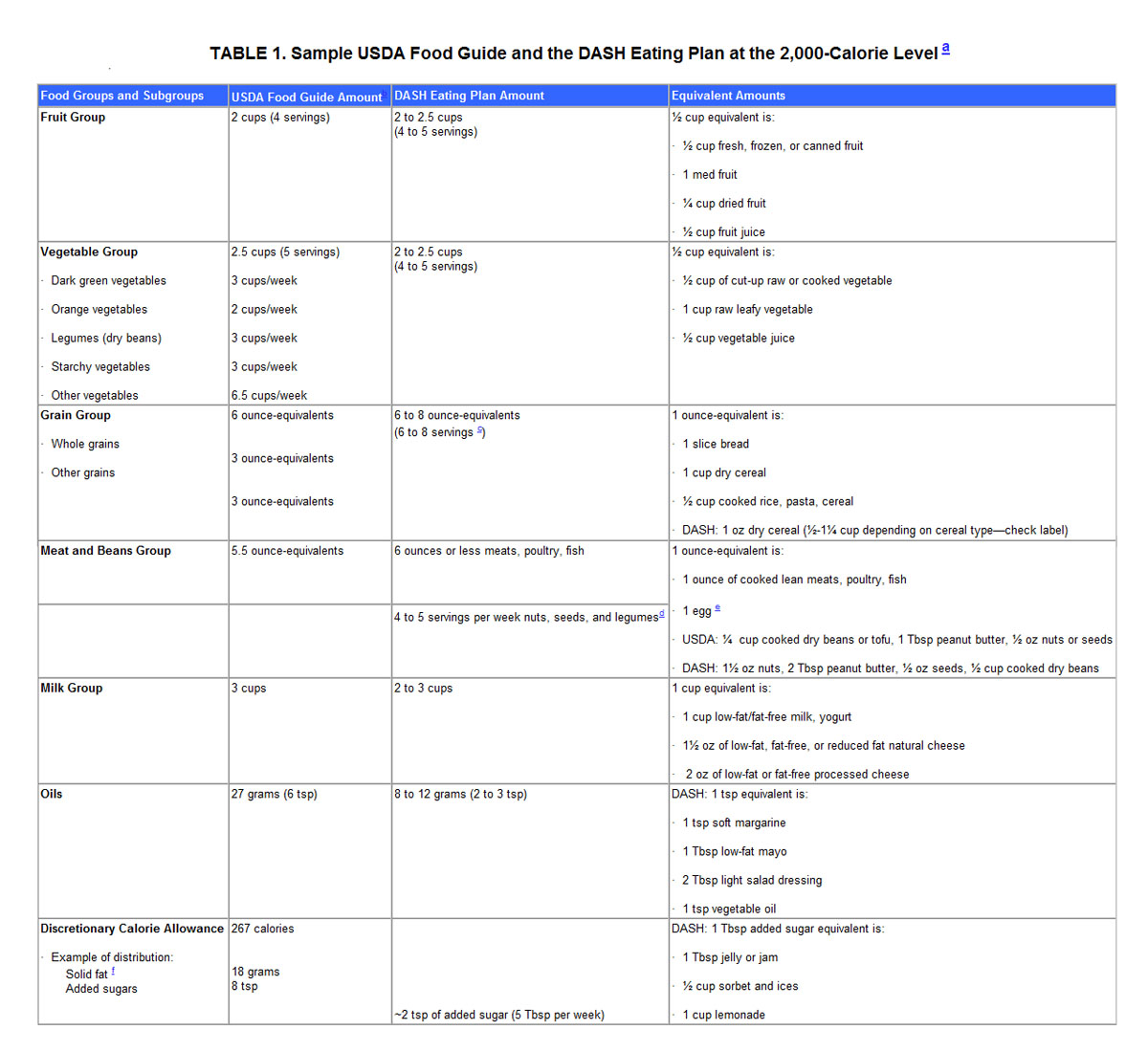
TABLE 1. Sample USDA Food Guide and the DASH Eating
Plan
at the 2,000-Calorie Levela
Amounts of
various food groups that are recommended each day or each week in
the USDA Food Guide and in the DASH Eating Plan (amounts are daily
unless
otherwise specified) at the 2,000-calorie level. Also identified are
equivalent
amounts for different food choices in each group. To follow either
eating
pattern, food choices over time should provide these amounts of food
from each
group on average.
Note: Table updated to reflect 2006 DASH
Eating Plan.
|
Food Groups
and Subgroups
|
USDA Food
Guide Amountb
|
DASH Eating
Plan Amount
|
Equivalent
Amounts
|
|
Fruit Group
|
2 cups (4
servings)
|
2 to 2.5 cups
(4 to 5 servings)
|
½ cup
equivalent is:
· ½
cup fresh, frozen, or canned fruit
· 1
med fruit
· ¼
cup dried fruit
· ½
cup fruit juice
|
|
Vegetable
Group
· Dark
green vegetables
· Orange
vegetables
· Legumes
(dry beans)
· Starchy
vegetables
· Other
vegetables
|
2.5 cups (5
servings)
3 cups/week
2 cups/week
3 cups/week
3 cups/week
6.5 cups/week
|
2 to 2.5 cups
(4 to 5 servings)
|
½ cup
equivalent is:
· ½
cup of cut-up raw or cooked vegetable
· 1
cup raw leafy vegetable
· ½
cup vegetable juice
|
|
Grain Group
· Whole
grains
· Other
grains
|
6
ounce-equivalents
3 ounce-equivalents
3 ounce-equivalents
|
6 to 8
ounce-equivalents
(6 to 8 servingsc)
|
1
ounce-equivalent is:
· 1
slice bread
· 1
cup dry cereal
· ½
cup cooked rice, pasta, cereal
· DASH:
1 oz dry cereal (½-1¼ cup depending on cereal type—check
label)
|
|
Meat and
Beans Group
|
5.5
ounce-equivalents
|
6 ounces or less
meats, poultry,
fish
|
1
ounce-equivalent is:
· 1
ounce of cooked lean meats, poultry, fish
· 1
egge
· USDA:
¼ cup cooked dry beans or tofu, 1 Tbsp peanut butter,
½ oz nuts or seeds
· DASH:
1½ oz nuts, 2 Tbsp peanut butter, ½ oz seeds, ½
cup cooked dry beans
|
|
|
|
4 to 5 servings
per week nuts,
seeds, and legumesd
|
|
Milk Group
|
3 cups
|
2 to 3 cups
|
1 cup equivalent
is:
· 1
cup low-fat/fat-free milk, yogurt
· 1½
oz of low-fat, fat-free, or reduced fat natural cheese
· 2
oz of low-fat or fat-free processed cheese
|
|
Oils
|
27 grams (6 tsp)
|
8 to 12 grams (2
to 3 tsp)
|
DASH: 1 tsp
equivalent is:
· 1
tsp soft margarine
· 1
Tbsp low-fat mayo
· 2
Tbsp light salad dressing
· 1
tsp vegetable oil
|
|
Discretionary
Calorie
Allowance
· Example
of distribution:
Solid fatf
Added sugars
|
267 calories
18 grams
8 tsp
|
~2 tsp of added sugar (5 Tbsp per week)
|
DASH: 1 Tbsp
added sugar
equivalent is:
· 1
Tbsp jelly or jam
· ½
cup sorbet and ices
· 1
cup lemonade
|
a All servings are per
day unless otherwise noted.
USDA
vegetable subgroup amounts and amounts of DASH nuts, seeds, and dry
beans are
per week.
b The 2,000-calorie
USDA Food Guide is appropriate for many sedentary males 51 to 70 years of age, sedentary females 19 to 30
years of age,
and for some other gender/age groups who are more physically active.
See table
3 for information about gender/age/activity levels and appropriate
calorie
intakes.
c Whole grains are
recommended for most grain
servings to meet fiber recommendations.
d In the DASH Eating Plan,
nuts, seeds, and
legumes are a separate food group from meats, poultry, and fish.
e Since eggs are high in
cholesterol, limit egg
yolk intake to no more than 4 per week; 2 egg whites have the same
protein
content as 1 oz of meat.
f The oils listed in this
table are not considered
to be part of discretionary calories because they are a major source of
the
vitamin E and polyunsaturated fatty acids, including the essential
fatty acids,
in the food pattern. In contrast, solid fats (i.e., saturated and trans
fats) are listed separately as a source of discretionary calories.
|